Why Is Efficiency Important in Cooling Systems?
In an industrial business, the cooling system guarantees production quality, but it is also one of the biggest items on the electricity bill. Research shows that in a typical production facility, 30% to 50% of total energy costs are spent on air conditioning and process cooling. Efficiency in cooling systems is therefore not just an environmentally friendly approach but a financial necessity that protects a business's competitiveness.
An inefficient system tries to do the same job while consuming more energy than it should. Besides increasing operating costs, this causes equipment (compressors, pumps, fans) to wear faster and increases the risk of breakdowns.
Factors That Affect Energy Efficiency
The efficiency of a cooling system (COP – Coefficient of Performance) does not depend on a single part but on the system's overall design and operating conditions. To save energy in industrial facilities and answer the question of how to reduce electricity consumption in cooling systems, the following technical components need to work in optimum conditions.
Compressor Efficiency
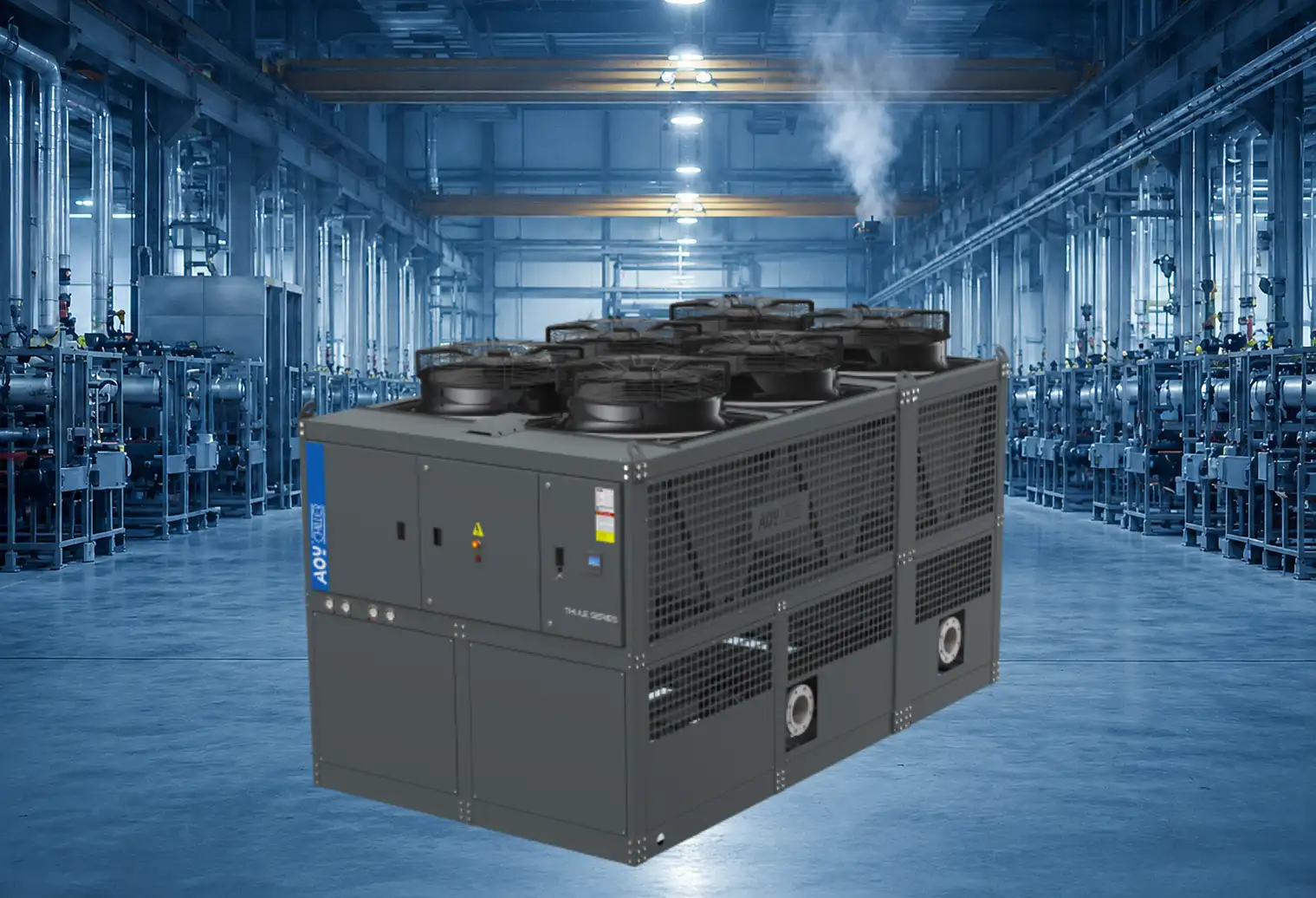
The compressor is the heart of the chiller system and its most energy-hungry component. Conventional fixed-speed compressors keep running at full capacity even when cooling demand drops, or they cycle on and off, drawing high inrush currents. This is a serious waste of energy.
Today, the most effective method for improving chiller efficiency is inverter (VSD – variable speed drive) technology, which adjusts motor speed to the load. When your factory's cooling demand drops to 50%, it delivers dramatic reductions in electricity consumption. Choosing a high-efficiency screw or magnetic bearing compressor directly determines the system's overall efficiency.
Heat Transfer Surfaces
An efficient cooling cycle depends on successful heat transfer on the condenser and evaporator surfaces. Over time, scaling (in water-cooled systems) or a layer of dust/oil (in air-cooled systems) forms on these surfaces and acts as an insulating barrier.
A fouled surface makes it harder to reject heat. The compressor then has to increase its discharge pressure (condensing temperature) to provide the same cooling. Technically, every 1°C rise in condensing temperature increases energy consumption by about 3%. Cleaning heat exchanger surfaces and water treatment are therefore vital for industrial cooling efficiency.
Ambient Temperature and Humidity
By the laws of thermodynamics, a cooling system takes heat from a cold environment and rejects it to a hot one. The hotter the outdoor environment we reject heat to, the harder the system has to work.
- In air-cooled systems: Efficiency drops as the outdoor air (dry-bulb) temperature rises. The unit should be positioned out of direct sunlight, where air can circulate freely.
- In water-cooled systems: Performance depends on the air's humidity (wet-bulb temperature). Tower performance can be affected in humid regions.
Advantages of Efficient Cooling Systems
An efficiency investment is usually the investment that pays for itself fastest. An optimized cooling system running with a high COP (Coefficient of Performance) does not just pay back as a lower electricity bill; it brings multiple benefits. When efficiency is achieved in cooling systems:
- Financial Sustainability: A 20–30% reduction in energy costs creates a significant increase in profitability on the annual balance sheet.
- Equipment Life: Efficient systems run without straining their capacity. Less vibration, lower operating temperatures and reduced mechanical stress extend the life of compressors and fans.
- Production Security: Stable operation minimizes the risk of sudden breakdowns. This prevents the production line from being interrupted by unplanned stoppages.
- Carbon Footprint: Lower energy consumption helps your business meet its environmental responsibilities and contributes to "Green Facility" goals.
Energy Saving Methods for Industrial Facilities
Cutting energy in industry does not mean sacrificing production; it means using energy wisely. To save energy in industrial facilities, you need to go beyond traditional methods and integrate modern technologies into the system.
Inverter Technology
Conventional compressors run at full power and stop even when the system needs only 10%, creating huge energy waste. The clearest answer to the question of how to reduce electricity consumption in cooling systems is inverter (VSD – variable speed drive) technology.
Inverter-driven compressors and fans automatically adjust motor speed to instantaneous cooling demand. Just as a car only presses the accelerator as much as it needs, the system uses only 40% of the energy when it is at 40% load. This technology eliminates inrush (starting) currents and saves up to 35% energy at partial loads.
Automation and Control Systems
You can't manage what you can't measure. Advanced automation systems are the brain among methods for improving chiller efficiency. Smart control panels and PLC systems monitor outdoor temperature, return water temperature and load changes on the production line in real time.
Thanks to algorithms such as floating head pressure control, the system automatically lowers condensing pressure when the outdoor air cools, easing the load on the compressor. In addition, chillers integrated into central building management systems (BMS) eliminate unnecessary running hours and inefficiencies caused by human error.
Maintenance and Periodic Checks to Improve Efficiency
Even if you buy the best chiller in the world, its performance will drop quickly if it is not maintained. Industrial cooling efficiency is an ongoing discipline.
- Condenser Cleaning: Fouled, dusty or scaled heat exchanger surfaces block heat transfer. This makes the unit use much more electricity to provide the same cooling.
- Refrigerant Charge Check: Too little or too much refrigerant upsets the system's thermodynamic balance and reduces efficiency.
- Oil Analysis: The quality of the compressor oil directly affects friction and therefore energy loss.
With periodic maintenance carried out to Atlas Copco standards, Yıldırım Soğutma's technical teams guarantee to keep your system as close as possible to its factory values.
Reduce Your Costs by Improving Energy Efficiency
In a world where energy costs rise every day, don't leave your cooling system to inefficiency. At Yıldırım Soğutma, with our domestically manufactured AOY products and our Atlas Copco distributorship, we design the high-efficiency cooling solutions best suited to your facility. Contact us today to analyze the efficiency of your existing system, explore opportunities to switch to inverter technology or lower your electricity bills with professional maintenance.