
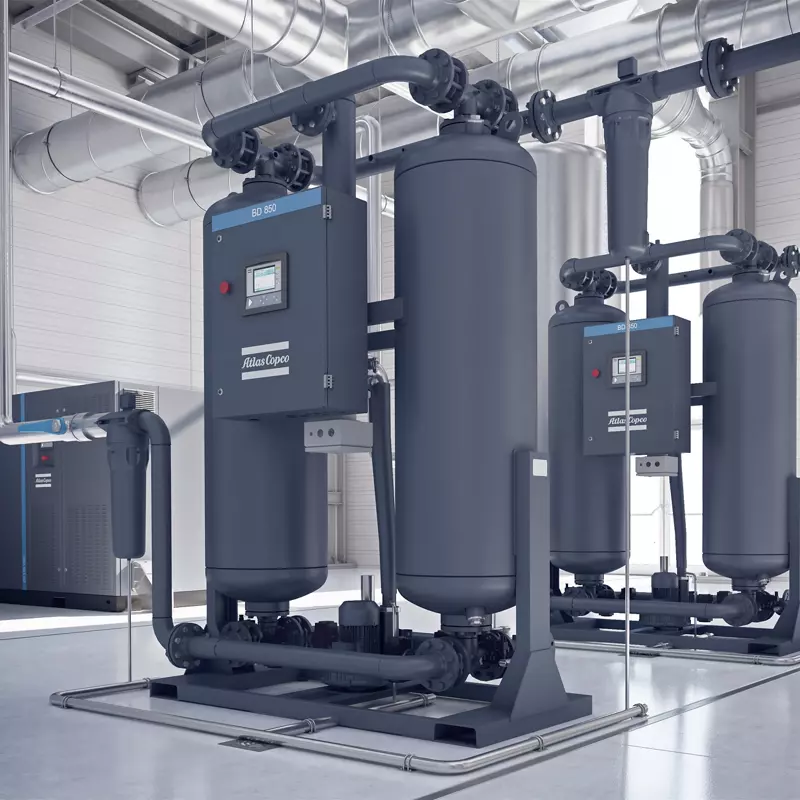
This variety, shaped by the mechanical method used to compress the air, covers a wide range of applications, from hand tools in a small workshop to turbines in huge power plants. Choosing the right technology is the most critical step not only for producing air but also for extending service life and maximizing energy savings.
Types of Compressors and Their Applications
The different types of compressors on the market vary widely, from the method of compressing air to energy consumption, and offer optimized solutions for every field from heavy industry to sensitive medical laboratories.
Piston Compressors
Piston models, the oldest and most traditional compression technology, work with a piston mechanism moving back and forth inside a cylinder. These units perform particularly well in applications that need low flow but high pressure. Well suited to intermittent operation, these systems offer an economical solution for small car repair shops, workshops and high-pressure air cylinder filling stations. Thanks to their simple design, they are easy to maintain, and their initial investment cost is quite low compared with other types of compressors.
Screw Compressors
Screw compressors, which carry the workload of modern industry, work on the principle of two intermeshing helical rotors turning to trap air and reduce its volume. Their ability to run 24/7 without interruption makes these models indispensable for large factories and production lines. Thanks to low friction, they heat up less and deliver high energy efficiency. In the textile, automotive and general manufacturing industries, where the need for compressed air is continuous and stable, they are the first choice thanks to their long life and low noise levels.
Rotary Vane Compressors
Rotary vane compressors work by vanes fitted into slots on a rotor pressing against the cylinder wall under centrifugal force and compressing the air. Mechanically very simple in design, these units are known for their compact structure and high reliability. The small number of moving parts minimizes wear and lowers maintenance costs. They are generally chosen for medium-sized industrial applications to meet a constant air flow requirement, and their quiet operation is an advantage in enclosed spaces.
Centrifugal Compressors
Working on the principle of dynamic compression, centrifugal compressors give air kinetic energy through impellers spinning at high speed and convert this energy into pressure energy. They are designed for huge facilities that need very high air flows. They are used in places such as oil refineries, large chemical plants and iron and steel works. Thanks to their ability to produce oil-free air and their efficiency in large-scale operations, they represent the most powerful segment among compressor types in terms of capacity.
Scroll Compressors
Scroll technology compresses air using two spiral elements, one fixed and the other orbiting eccentrically. The most notable features of these systems are that they can deliver completely oil-free air and run almost without vibration. Because of their very low noise levels, they are used where silence and air purity are critical, such as laboratories, hospitals, dental clinics and sensitive food packaging facilities. Scroll models stand out as one of the most advanced solutions for small and medium-sized businesses that expect high air quality.
Advantages and Disadvantages of Compressors
These units, considered the heart of industrial facilities, offer different operational benefits or limitations depending on the technology chosen. For example, the biggest advantages of piston models are their low initial investment cost and ability to reach high pressures, but they have disadvantages such as high noise levels, heavy vibration and the need for intermittent operation. Screw systems stand out for 24/7 continuous operation and energy efficiency but require a higher purchase cost because of their complexity.
Oil-free compressor types offer a critical advantage with zero contamination risk in industries such as food and healthcare, but they have more demanding maintenance intervals and generally higher operating costs than oil-injected models. Although centrifugal models offer unmatched efficiency at large flows, they can be inefficient at low capacities and their installation costs are very high.
Factors to Consider When Choosing a Compressor
In the selection process, the facility's total air demand (flow) and the pressure (bar) at which this air will be used should be clarified first. An oversized system will run idle constantly and waste energy, while an undersized one will cause production stoppages due to insufficient pressure and wear out prematurely from overheating.
The operating regime should also be considered when choosing a compressor. If there is continuous air demand, a screw compressor should be chosen; for intermittent use, a piston compressor or another suitable type. For energy efficiency, the suitability of inverter (VSD) models, availability of maintenance and spare parts, noise restrictions and physical conditions such as dust and temperature must also be included in the technical assessment.
Energy Efficiency in Compressor Systems
Because compressed air production accounts for a very large share of total electricity costs in an industrial facility, energy efficiency is the top priority. Looking at a system's total life cycle cost, the initial purchase price makes up only around 10–20%, while the rest comes almost entirely from energy consumption.
The first step in improving efficiency is to choose, from among the types of compressors, the one that fully matches the business's air demand. Especially in facilities with variable air demand, inverter models adjust motor speed to instantaneous need and can reduce wasted energy by up to 35%. In addition, periodically finding and repairing air leaks in the system, lowering pressure settings to the minimum needed and using the heat the compressor releases during operation for space heating through energy recovery systems are engineering solutions that directly increase profitability.
Compressor Maintenance and Troubleshooting
Trouble-free, long-lasting operation of compressed air systems is only possible with a disciplined periodic maintenance schedule. Maintenance not only prevents breakdowns but also keeps the system at its original energy efficiency. Each technology has different maintenance needs; for example, valve and piston ring checks are critical for piston models, while oil quality, filter cleanliness and separator life come first for screw compressors.
Not replacing air and oil filters on time reduces intake efficiency, straining the motor and causing it to overheat. In troubleshooting, the most common problems — sudden pressure drops, high discharge temperature or unusual mechanical noise — are usually caused by insufficient cooling or leaks. Responding quickly to faults prevents a small part replacement from turning into a major overhaul and keeps the production line from being interrupted by unplanned stoppages.
Let's Choose the Right Compressor Technology for Your Business Together
Choosing the right unit is vital for increasing efficiency in your industrial processes and lowering your energy costs. With our experience dating back to 1995 and our authorized Atlas Copco distributorship, we offer the compressor and chiller solutions that best suit your facility's needs. Whether for a new installation or 24/7 technical service support for your existing system, contact us to benefit from Yıldırım Soğutma's engineering capability and get a quote tailored to you.
Frequently Asked Questions
What should you look for when choosing a compressor?
To make the right choice, the total air flow (m³/min) and working pressure (bar) the facility needs should first be calculated precisely. In addition, the production line's air quality expectations (oil-injected or oil-free air), the business's daily operating hours and future growth potential should be taken into account. When choosing among the available types of compressors, you should look not only at the initial investment cost but also at energy consumption, spare parts availability and service options.
Which type of compressor is more efficient?
In facilities with continuous, intensive air demand, screw compressors offer the highest efficiency, while centrifugal models are unrivaled for very high-volume air requirements. In businesses with variable air demand, inverter (VSD) models deliver the greatest energy savings because they adjust motor speed to need. The most efficient model is therefore the one that best suits the business's operating characteristics.
How is compressor maintenance carried out?
Maintenance covers periodic checks planned according to the unit's running hours. It basically involves cleaning or replacing the air and oil filters, checking the oil level, renewing the separator filters and cleaning dust from the cooling system. Belt tension, electrical connections and air leaks in the system should also be checked regularly. This maintenance, carried out by professional teams, should follow the technical instructions set for different types of compressors.
How can compressors' energy consumption be reduced?
The most effective way to reduce energy consumption is to find and quickly repair air leaks in the system, because even the smallest leak creates a significant energy cost. In addition, lowering the working pressure to the minimum production needs (every 1 bar reduction saves 7%), using waste heat through energy recovery systems and minimizing pressure losses with efficient filters significantly reduce total energy spending.