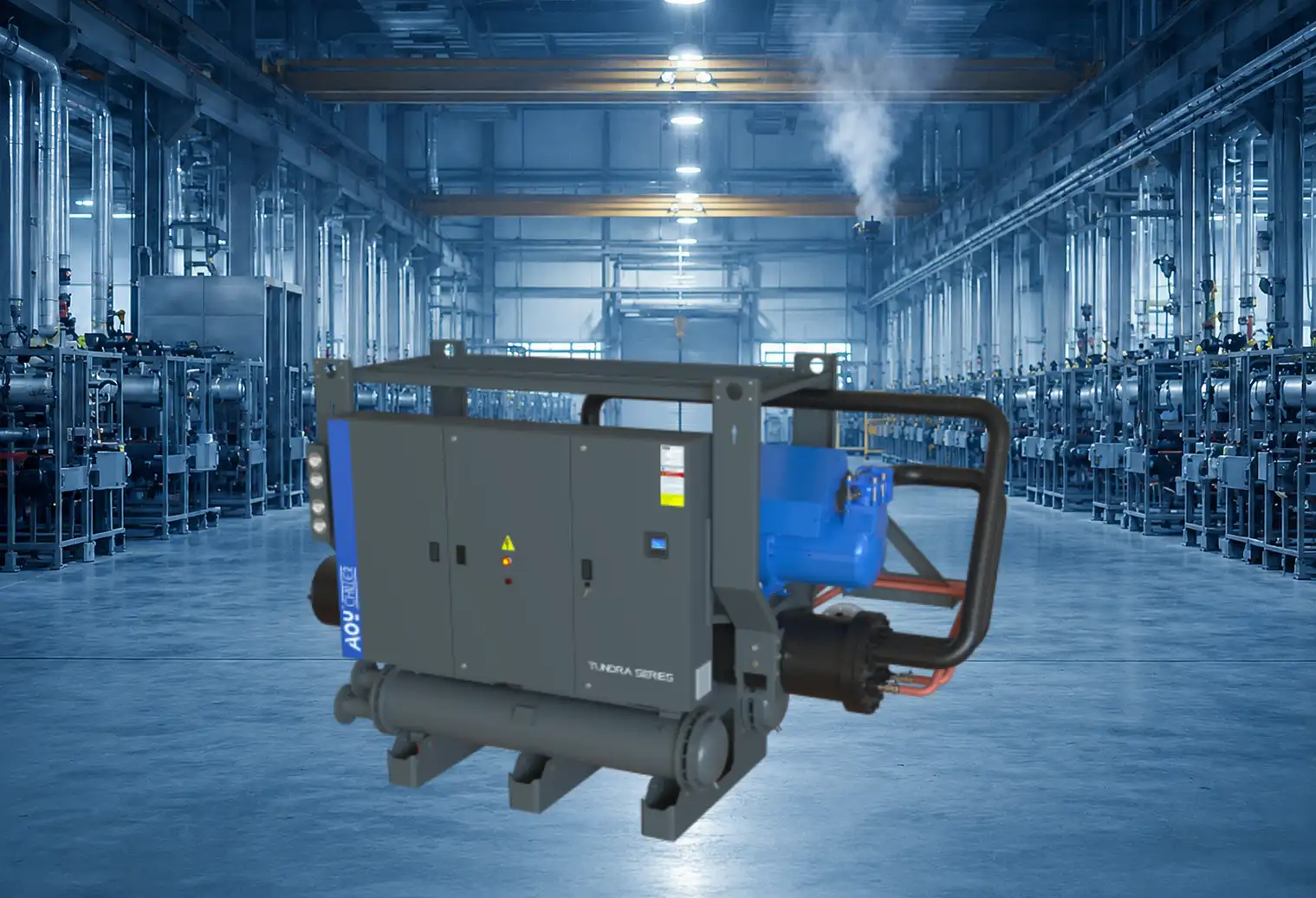
With proper capacity management, regular technical checks and modern automation solutions, system performance can be optimized. Strategies focused on energy saving both extend equipment life and provide a sustainable production infrastructure.
On modern production lines, cooling accounts for a significant share of operating expenses, and every improvement made here is reflected directly in profitability. To get maximum efficiency from an industrial chiller system, not only the quality of the unit but also how the system is managed is very important. In this article, we look in detail at six key strategies that will take your facility's cooling performance to the top and bring your energy costs under control.
1. Choose a Chiller System with the Right Capacity
Choosing the wrong capacity can become a permanent mistake that causes the unit to waste energy throughout its working life. When planning an industrial chiller system, future growth targets and instantaneous peak loads must be included in the engineering calculations.
The Downsides of Oversized or Undersized Capacity
- A unit with far more capacity than needed makes the compressor cycle on and off very often, quickly wearing out mechanical parts.
- Using an unnecessarily large unit needlessly raises the initial investment and operating costs, putting a strain on the budget.
- An undersized system that has to run constantly at full load overheats and soon suffers serious mechanical failures.
- With insufficient capacity, the production line cannot be cooled as required, and the quality of the products made suffers directly.
- A capacity imbalance prevents the system from running stably and causes chiller electricity consumption to rise to unpredictable levels.
How Correct Capacity Calculation Affects Energy Consumption
- Precise calculations based on engineering data ensure that the unit always stays within its most efficient operating range.
- When capacity is set to match changes in ambient temperature and production heat load, the system avoids wasting energy.
- With a correctly sized industrial chiller system, the running hours of the main components are optimized and periodic service needs are reduced.
- In facilities with precise capacity planning, cooling costs stay at a much more stable and predictable financial level from month to month.
- When the unit's capacity matches the cooling power required, energy losses in the system are minimized and maximum operational savings are achieved.
2. Don't Neglect Regular Maintenance and Periodic Checks
A poorly maintained industrial chiller system loses its heat transfer capability over time due to accumulated dirt and uses much more energy to reach the target cooling value. Regular checks do more than prevent major breakdowns; they also keep chiller electricity consumption at ideal levels, contributing directly to the operating budget.
The Importance of Cleaning the Condenser and Evaporator
Dust, dirt and scale that build up on condenser surfaces over time form a layer that prevents efficient heat transfer. When heat transfer becomes harder, the compressor has to work at higher pressures, which dramatically increases chiller electricity consumption. Periodic professional cleaning keeps heat exchange efficiency at its highest and lets the system run easily.
Fouling on the evaporator side limits the refrigerant's ability to cool the water. This makes the system stay active much longer to reach the target temperature. A clean evaporator lets the water cool quickly and efficiently, preventing wasted energy. Because it directly affects system efficiency, both sides of the heat exchangers must be kept clean.
Higher operating pressure caused by dirt on heat transfer surfaces leads not only to energy loss but also to compressor overheating. Excessive heat breaks down the oil, accelerates mechanical wear and shortens the unit's life.
Checking Filters, Fans and Compressors
In air-cooled systems, the condition of the fan blades and motors directly affects air flow over the condenser. Fans that run inefficiently or are out of balance cannot remove the heat, putting strain on the system. Periodic fan maintenance optimizes air circulation and keeps energy consumption in balance. How clogged the filters are is another factor affecting air intake performance.
Compressors are the most energy-hungry and most expensive parts of the cooling system. The compressor's oil level, pressure values and electrical current draw should be measured regularly. An inefficient compressor drags down the efficiency of the whole system and can increase chiller electricity consumption costs uncontrollably. Compressor problems diagnosed early prevent the system from stopping completely and save on major repair costs.
Loose electrical connections and contactors in the system cause increased resistance and unnecessary heating. This creates a fire risk and also has a negative effect on energy efficiency. All components in the control panel should be tightened periodically and checked with a thermal camera.
3. Optimize Cooling Water and Refrigerant Performance
The condition of the water and refrigerant circulating in the system determines the quality of energy transfer. Even the slightest deviation in fluid performance upsets the system's balance point and raises energy consumption. Proper chemical treatment and refrigerant level checks keep the cooling cycle running smoothly and efficiently.
Checking the Refrigerant Level
If there is less refrigerant in the system than there should be, the evaporator cannot provide enough cooling. This shortage makes the compressor run much more than normal to reach the target temperature. An industrial chiller system running short of refrigerant cannot cool properly and also drives up electricity bills.
Too much refrigerant, on the other hand, can raise system pressures excessively and cause mechanical damage to the compressor. In a system running under excessive pressure, chiller electricity consumption rises far above expected values. Refrigerant charging must always be done using precise measuring instruments and in line with the manufacturer's data.
The purity of the refrigerant and the absence of moisture in it are also critical for performance. Replacing the filter driers on time protects the system by trapping foreign matter and moisture in the refrigerant. Maintaining refrigerant quality prevents sensitive parts such as the expansion valve from clogging.
Optimizing Water Flow and Temperature Values
Setting the correct flow rate for the cooling water is essential for efficient heat transfer. Low flow means the water cannot give up enough heat in the evaporator, while high flow unnecessarily increases pump energy consumption. Controlling pump systems with inverters adjusts water flow to demand and saves energy.
Keeping the set water temperature lower than production requires increases energy costs by about 2% to 3% for every degree. If the production process runs smoothly with 15-degree water, setting the system to 10 degrees is a big waste of energy. Precisely calibrating water temperatures prevents unnecessary loading. The system should be optimized by continuously monitoring water inlet and outlet temperatures with smart sensors.
Insulating the pipes in the distribution line also keeps the water from warming up before it reaches its destination. Lines with damaged insulation absorb heat from the surroundings and make the chiller unit work harder. Thermal protection of the pipelines ensures that cooling power is delivered directly to the production line.
4. Make Use of Automation and Smart Control Systems
Because cooling loads in today's modern production facilities change constantly throughout the day, manual intervention is not enough to ensure energy efficiency. Smart automation systems track all the variables in the system in real time and optimize compressor and pump speeds to demand with great precision. Thanks to this technological infrastructure, the industrial chiller system gains a proactive operating discipline that avoids unnecessary loading and minimizes wasted energy.
PLC and Automation Systems
A central PLC control system makes all the components of the cooling unit work in harmony. When the outdoor temperature drops, it automatically updates the system's operating parameters and switches to energy-saving mode. Real-time data on the PLC screens makes it easier to analyze chiller electricity consumption trends and take action.
Automation systems also speed up fault diagnosis, minimizing system downtime. By reporting how efficiently each part is working, they enable predictive maintenance. This way, the technical interventions needed for an industrial chiller system can be planned before efficiency drops.
Thanks to remote monitoring modules, technical teams can access the system anytime, anywhere. This prevents inefficient operation in emergencies and allows quick solutions. PLC units working together with energy analyzers continuously record consumption values and reveal savings potential.
Capacity Control Based on Load
Production lines can run at different intensities throughout the day, constantly changing cooling demand. Capacity control systems save energy by reducing output when the compressor does not need to run at full load. This way, chiller electricity consumption matches only the amount of cooling needed. Step control or proportional control methods prevent the system from being put under unnecessary strain.
In facilities with more than one chiller unit, using a sequencer optimizes load sharing between the units. By equalizing the machines' running hours, it balances wear and increases overall efficiency. In a group of industrial chiller system units, managing the whole system according to its efficiency curve, rather than overloading just one machine, saves energy.
Advanced compressors that can operate at partial loads maintain their full-load efficiency at low loads too. This technology is a big advantage, especially during seasonal transitions or low-capacity shifts. Smart load control also reduces the inrush currents drawn from the grid, improving the facility's overall power quality.
5. Improve the Operating Environment
The environmental conditions of the area where chiller units are located are the most fundamental factor directly affecting the unit's ability to reject heat to the outside atmosphere. Inadequate ventilation or poor placement in a cramped space causes discharged hot air to be drawn back in, raising system pressures and pushing the compressor beyond its capacity. This strain is reflected directly as an increase in chiller electricity consumption costs and seriously puts the unit's mechanical health at risk.
Air Circulation and Ventilation
Air-cooled units need enough free space around them so that fresh air can pass freely through the condenser coils. Squeezing the unit into a tight space or enclosing it causes the discharged hot air to be drawn back in (short-circuiting). This raises condenser pressures and quickly pushes up chiller electricity consumption.
When positioning the unit, the prevailing wind direction should be taken into account, and hot air discharge should not be obstructed. For units in enclosed spaces, a connection to the outdoors should be made with powerful extraction fans and ducts. The cooler the air an industrial chiller system can draw in, the less energy it needs to complete the cooling cycle.
Hot air from other heat sources nearby (other machines, boilers, etc.) should be kept away from the chiller unit. Heated air lowers condenser efficiency and makes the compressor start more often. Any object or build-up of dirt that obstructs air flow shows up as an extra cost on the energy bill.
How Ambient Temperature Affects Chiller Performance
As the outdoor temperature rises, rejecting heat to the atmosphere through the condenser requires more energy. Although this is unavoidable in summer, some improvement can be achieved by keeping the unit out of direct sunlight. Shading systems or placement under a roof lower the temperature of the air the unit draws in by a few degrees, which has a positive effect on chiller electricity consumption.
Adiabatic pre-cooling systems with water sprays, used in some facilities, cool the air by humidifying it on hot days and increase condenser efficiency. This method prevents the system from tripping on high pressure in extreme heat while also saving energy. For an industrial chiller system, every step taken to lower the ambient temperature eases the load on the compressor.
In winter, the cool outdoor air can be used through free cooling. If the air temperature is low enough, the water can be cooled using only the fans, without the compressors running. This method brings energy consumption close to zero throughout the winter, creating a huge cost advantage.
6. Invest in Energy-Efficient Equipment and Modern Technologies
An industrial chiller system upgraded with modern hardware can produce far more cooling power with far fewer resources thanks to new-generation compressors and efficient heat exchanger designs. Investing in technological transformation not only saves energy but also strengthens production security by minimizing downtime caused by breakdowns. Choosing equipment with high efficiency ratings in particular is the most effective way to keep chiller electricity consumption costs permanently under control.
Advantages of Inverter Technology
- Unlike fixed-speed models, inverter compressors adjust their speed to demand, firmly preventing unnecessary chiller electricity consumption.
- By eliminating the high inrush current at start-up, they reduce the electrical load on the grid and the risk of faults.
- They minimize fluctuations in water temperature, sending much more stable and precise cooling water to the production line.
- Because they prevent the compressor from constantly stopping and starting, they slow down friction wear on mechanical parts and lower maintenance costs.
- By creating an industrial chiller system that is highly efficient even at partial loads, they make savings of up to 30% on the total energy bill possible.
Chiller Systems with a High COP
COP (Coefficient of Performance) is the most fundamental metric, showing how many units of cooling energy a cooling system produces for every 1 unit of electrical energy it uses. Units with a high COP do the same cooling work using far less electricity, which directly reduces chiller electricity consumption. When buying a modern chiller, a high value here is the most important criterion for the unit's long-term profitability.
Advanced microprocessors in new-generation units continuously optimize COP according to operating conditions. Efficient heat exchangers and smart valves used at the design stage help keep this coefficient high at all times. When renewing an industrial chiller system, focusing on COP and EER (Energy Efficiency Ratio) values shortens the payback period of the investment.
Precise control and high-quality components ensure that COP is affected as little as possible by variables such as outdoor temperature. This stability means the energy budget can be kept under control, especially for facilities that operate all year round.
Energy-Efficient Chiller Solutions with Yıldırım Soğutma
At Yıldırım Soğutma, we don't just install units; we carry out comprehensive analyses and professional optimization work that will increase your system's overall efficiency. In each of our industrial chiller system solutions, we focus on energy saving to deliver a long-lasting operation with low operating costs. With our expert technical team, we are always by your side with strategic improvements that keep your chiller electricity consumption to a minimum.
Capacity Analysis Tailored to Your Business
Through our site surveys at Yıldırım Soğutma, we measure the heat loads on your production line in the finest detail and determine the capacity that exactly matches your needs. This meticulous analysis allows us to eliminate excess chiller electricity consumption caused by unnecessarily large capacity right at the installation stage. With solutions designed specifically for your business, we optimize your initial investment and minimize your operating costs.
Periodic Maintenance and Performance Optimization
To keep your cooling systems at the efficiency they had on day one, we turn our periodic service from a routine into a comprehensive performance improvement process. During every industrial chiller system maintenance carried out by our expert teams, we don't just clean the parts; we recalibrate all operating parameters with a focus on energy efficiency. This prevents performance losses that build up over time, extending your unit's life and preventing increases in your electricity bills.
Professional Technical Support for Industrial Cooling Systems
Thanks to the 24/7 technical support we offer at Yıldırım Soğutma, we develop precise solutions that protect your chiller electricity consumption values even in situations that require emergency intervention. With an approach that combines technology and engineering, we bring your industrial cooling infrastructure up to tomorrow's energy saving standards today.
Frequently Asked Questions (FAQ)
How can energy efficiency be improved in chiller systems?
Efficiency is improved by choosing the right capacity, cleaning the condenser and evaporator regularly, and optimizing water flow and temperature values to production needs. Using compressors with inverter technology and integrating smart automation systems also maximizes energy savings.
Does periodic maintenance reduce electricity consumption?
Yes. Dirty condenser and evaporator surfaces make heat transfer harder and cause the compressor to use more electricity. Regular maintenance lets the system run easily, which can reduce chiller electricity consumption costs by 15% to 25%.
How much do inverter chiller systems save?
Because inverter technology adjusts compressor speed to demand, it can save up to 30% energy compared with fixed-speed units, especially in facilities that run at partial loads. It also extends the life of mechanical parts by reducing the number of start-stop cycles.
Why is choosing the right chiller capacity important?
Capacity larger than needed leads to unnecessary energy consumption and premature wear, while capacity that is too small leads to insufficient cooling and a constant risk of breakdowns. An industrial chiller system with the right capacity always stays in its most efficient operating range, keeping operating costs in balance.
What is COP and why should it be considered?
COP (Coefficient of Performance) expresses the cooling power a unit delivers for each unit of energy it consumes. The higher the COP, the more cooling the unit provides with less electricity. Choosing systems with a high COP at the investment stage therefore delivers long-term savings.
Can old chiller systems be made energy-efficient?
Yes. Efficiency can be improved by adding inverter applications, modern automation controllers and heat recovery systems to existing systems. Chemical cleaning of fouled heat exchangers and optimizing the refrigerant level also deliver significant performance improvements for an older industrial chiller system.