
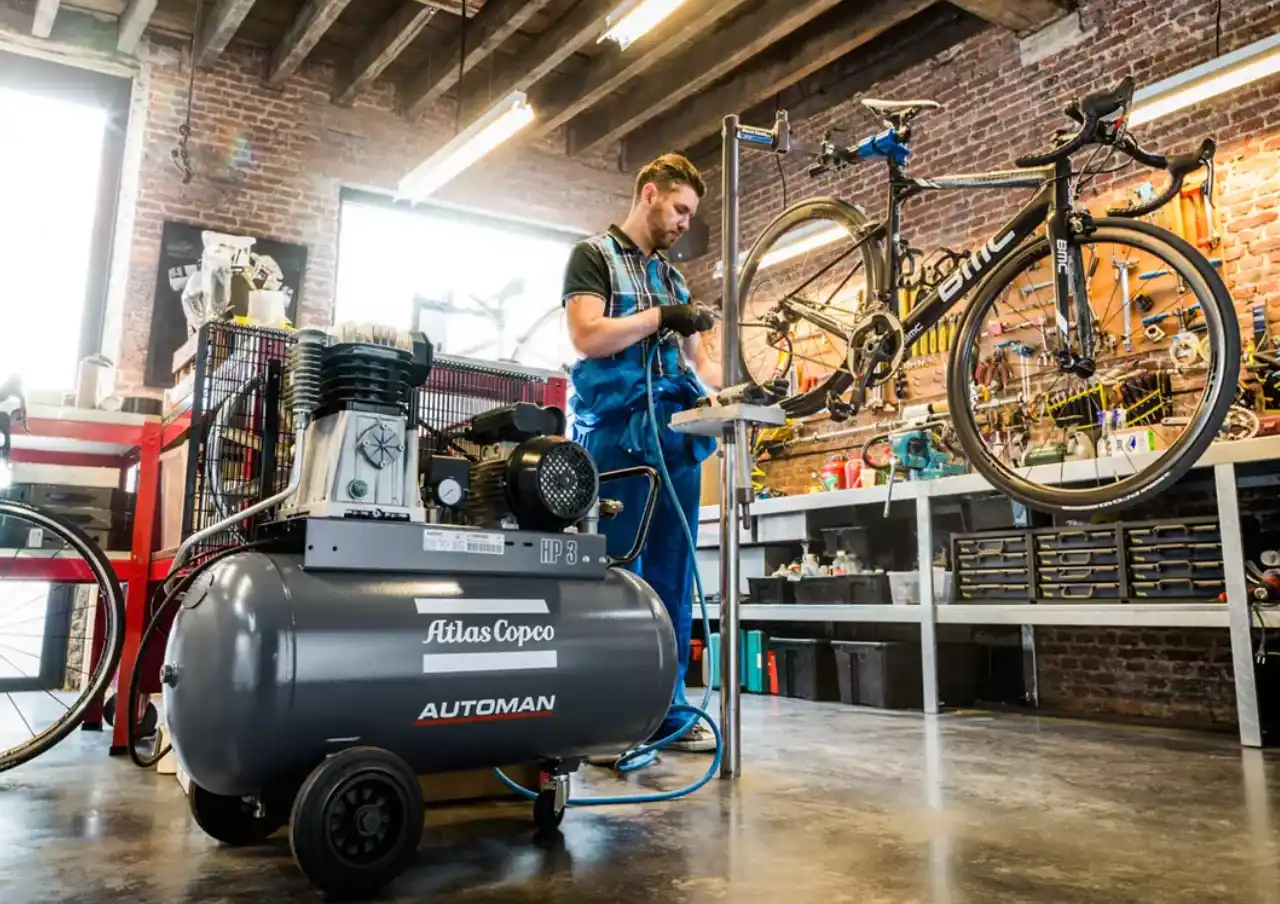
Turning labor into efficiency at every scale, from complex production lines to small workshops, this technology puts energy into a form that can be stored, transported and controlled. Although it comes in models with different operating principles, such as piston, screw or centrifugal, the basic aim is to turn free outdoor air into a high-pressure power source so that industrial systems can run continuously and at high performance.
How Do Compressed Air Compressors Work?
A compressed air compressor turns outdoor air into a powerful energy source. Its operating logic is basically based on reducing the volume of air at atmospheric pressure by mechanical means, which increases its pressure. Whether screw or piston, all systems go through the stages of taking in air in a controlled way, compressing it in the internal mechanism to raise its energy and preparing it to be delivered to where it is needed. In this process, not only the pressure increase but also critical technical details such as heat management and maintaining air quality are managed at the same time.
Taking in and compressing the air
The first step is bringing free outdoor air into the system through the intake valves. This air passes through high-efficiency intake filters to remove dust, moisture and particles. The cleaned air is then transferred to the screw element or piston cylinders, depending on the type of compressor. The mechanical motion here traps the air in an enclosed volume. As the volume shrinks, the air molecules move closer together, turning kinetic energy into potential energy. The high heat released during compression is balanced by cooling systems, protecting the mechanical parts and maintaining efficiency.
Pressurization and storage
The air leaving the compression chamber has now reached the target pressure, but this energy is not yet ready for direct use. The pressurized air is transferred to air receivers to prevent fluctuations in the system and provide an uninterrupted supply at times of peak demand. Storage not only creates a reserve but also helps the air, heated during compression, cool somewhat and allows the moisture in it to condense and separate. This stage keeps the system at a stable pressure, prevents damage to end equipment and saves energy.
Delivering compressed air to points of use
In the final stage, the stored air, brought to a certain quality standard, is sent through the piping to the points of use. Before delivery begins, however, depending on the level of industrial precision required, it may need to pass through air dryers and fine filters to remove all oil and water vapor. This high-quality energy produced by the compressed air compressor reaches pneumatic tools, painting units, robotic arms or production lines through pipelines of a suitable diameter. Keeping pressure losses in the delivery line to a minimum is the most important factor directly affecting the system's overall efficiency.
What Are the Types of Compressed Air Compressors?
The amount of air, pressure and air quality industrial facilities need vary greatly from business to business. This variety has made it necessary to develop different technologies based on the method of compressing air. Each type of compressed air compressor is designed to offer specific operational advantages and optimize operating costs and production efficiency. Choosing the right technology not only saves energy but also extends the life of the equipment used and minimizes maintenance costs.
Screw compressors
Screw compressors are the most common choice in large and medium-sized businesses with continuous air demand. These systems compress air through two intermeshing helical rotors (the screw element) turning in opposite directions. Low friction and the ability to run without interruption make these units ideal for factories producing 24/7. Screw systems are known for low noise levels and high energy efficiency, and they deliver a stable air flow on sensitive production lines by keeping pressure fluctuations to a minimum.
Piston (oil-lubricated and oil-free) compressors
Working on a traditional principle, piston compressors pressurize air through pistons moving back and forth inside a cylinder. Oil-lubricated models need a lubrication system to prevent wear on metal parts and provide cooling, while oil-free models are preferred in industries such as food and healthcare where air quality is critical. These compressors usually offer an economical solution for applications with lower flow but high pressure, or for small workshops with intermittent air demand.
Scroll compressors
Designed especially for environments that need quiet operation and completely oil-free air, scroll compressors work with two spiral elements, one fixed and the other orbiting eccentrically. Thanks to the small number of moving parts, vibration is minimal and wear is very low. Used in places such as laboratories, dental clinics and precision electronics manufacturing facilities, these systems stand out for their compact design and ease of maintenance. Because no oil is used during compression, the outlet air is completely pure and free of particles.
Centrifugal compressors
Centrifugal compressors come into play in huge industrial facilities that need high-volume, continuous air flow. Unlike other models, these units work on the principle of dynamic compression: an impeller spinning at high speed accelerates the air, and this kinetic energy is then converted into pressure energy. Usually chosen for petrochemicals, iron and steel and large power plants, these systems can provide very high air flows from a single unit and deliver large-scale efficiency in energy-intensive industries.
Differences Between Oil-Injected and Oil-Free Compressors
When choosing the right equipment for industrial applications, the most basic distinction is whether oil is used in the compression chamber. In oil-injected systems, oil lubricates the moving parts, provides sealing and absorbs the heat generated during compression. This extends the unit's mechanical life and lowers operating costs, but there is a risk of oil particles, however microscopic, remaining in the outlet air.
Oil-free systems, on the other hand, work with specially coated components and advanced cooling channels so that the air never comes into contact with oil at any stage. An oil-free compressed air compressor is indispensable in sensitive production processes where the air must be 100% pure. While oil-injected models provide economical power for heavy industry and general production, oil-free models are the first choice for facilities seeking high hygiene and zero contamination risk.
Where Are Compressed Air Compressors Used?
In the modern world, almost every production process needs compressed air in some way. This energy source is so widespread because it is safer than electricity, can be stored and can be used reliably even in extreme conditions. Seen as the heart of a business, the compressed air compressor sometimes moves a huge robotic arm and sometimes powers the most sensitive laboratory equipment, depending on the size of the facility and the type of production. Its applications span a very wide spectrum, from heavy industry to high-tech medicine.
Production and industrial facilities
On general production lines, compressed air is the most basic component of automation systems. This technology is used in hundreds of different operations, such as moving conveyor belts, transporting parts from one point to another, operating packaging machines and powering pneumatic hand tools on assembly lines. In large factories where energy efficiency is a priority, a central air station meets the needs of the whole facility and directly affects production speed and continuity.
Automotive and metalworking
The automotive industry is one of the areas where compressed air is used most intensively and most precisely. Robotic welding arms used in body assembly, tire fitting units and especially paint shops need high-quality air. In metalworking, it is used as a shielding gas in laser cutting machines or for surface cleaning in sandblasting stations. Dry, oil-free air directly determines paint quality and the corrosion resistance of the metal.
Healthcare and medical applications
In medicine, air quality is subject to the highest standards because it directly concerns human health. Clean compressed air is used in many places, from operating surgical instruments in operating theaters to breathing equipment in intensive care units. In addition, the long life of the precision equipment used in dental clinics and prosthetics laboratories depends on a pure air flow free of moisture and oil.
Food and beverage industry
Food safety standards require that air coming into contact with the product during production contains no contaminants. Compressed air plays an important role in stages such as hands-free packaging, liquid filling on bottling lines, conveying grain and aerating fermentation tanks. Because not even the smallest oil leak that could affect the taste, smell or shelf life of products is allowed in this industry, advanced filtration systems are preferred.
Textile and clothing industry
In textile factories, compressed air is used at every stage, from spinning and weaving yarn to cleaning and dyeing fabric. Air-jet looms in particular need a very precise, continuous air flow to shoot the weft yarn at high speed. The energy efficiency compressors provide also comes to the fore in cleaning dust and lint from fabric surfaces and in pressing and packaging textile products.
What Should You Look for When Choosing a Compressed Air Compressor?
For a business, choosing a compressor is a strategic investment that determines the facility's energy costs and production quality for the next ten years. Choosing the wrong capacity can cause unexpected stoppages on production lines, while choosing a system that is too large can cause huge energy waste. When choosing the ideal compressed air compressor, the facility's immediate needs and future growth projections should be assessed together, focusing on the efficiency the unit will deliver over its total service life rather than its initial investment cost.
Required air flow (m³/min)
Flow represents the volume of air the system can produce per unit of time and is usually called "capacity". To determine the right flow, add up the maximum air consumption values of all the pneumatic tools, machines and other air-consuming equipment in the facility. However, the simultaneous use factor and possible air leaks in the system should also be taken into account. If the chosen capacity is below the required flow, system pressure will keep dropping and machines will lose performance. Conversely, the unit running constantly "unloaded" will needlessly increase energy costs.
Working pressure (bar)
Pressure expresses the air's ability to do work. The pressure value of the compressor to be chosen should be based on the requirement of the equipment that works at the highest pressure in the facility. The most critical point to watch here is that running at higher pressure than necessary dramatically increases energy costs; every extra 1 bar of pressure increases energy consumption by about 7%. In an ideal system, models that most efficiently provide the net pressure needed at the point of use should be chosen, taking into account pressure losses in the pipeline and filter resistance.
Continuous or intermittent operation
The business's operating regime is the main factor determining which compressor technology should be chosen. If a facility produces 24 hours without interruption, screw systems with high thermal stability that can run continuously under load should be chosen. In small workshop-type businesses where air demand is very irregular and the unit starts and stops frequently, piston models, which suit this operating pattern better, can be an economical option. Because the unit's load/unload cycles and the number of motor starts per hour directly affect its mechanical life, a technology suited to the operating cycle must be chosen.
Energy efficiency and operating costs
Electricity bills make up about 80% of the total cost of a compressor over a ten-year service life. Rather than the initial purchase price, the unit's specific energy consumption (the kW used to produce a given amount of air) should therefore be examined. Variable speed drive (VSD/inverter) models adjust motor speed to air demand and can save up to 35% energy compared with conventional models. In addition, systems that allow waste heat to be recovered lower the business's heating costs and maximize overall efficiency.
Why Is Efficiency Important in Compressed Air Systems?
In industrial facilities, compressed air production accounts for a huge share of total electricity consumption, about 10% to 30%. This makes efficiency not just a preference but an economic necessity that directly affects profitability.
An inefficient compressed air compressor throws away much of its energy as heat loss instead of turning it into work, which causes production costs to rise uncontrollably. Efficiency-focused system management includes minimizing air leaks, keeping pressure settings only at the level needed and responding to variable air demand with smart solutions.
In an optimized system, equipment is also under less strain, which extends part life and reduces unexpected breakdown stoppages. In line with today's sustainability goals, energy efficiency also means a lower carbon footprint, helping businesses both comply with global standards and gain prestige.
Maintenance and Safety for Compressed Air Compressors
Because compressed air systems have high energy density and are subject to mechanical stress, they must be operated under periodic maintenance and strict safety protocols. A regular maintenance schedule includes vital steps such as replacing air and oil filters, checking oil levels, cleaning cooling systems and checking belt tension. A compressed air compressor whose maintenance is neglected loses performance over time and can lead to serious problems such as overheating and mechanical wear.
The air receivers at the heart of the system must undergo periodic pressure tests, the safety valves must be checked to make sure they work, and emergency stop mechanisms must be active at all times. It should not be forgotten that compressed air, when released uncontrollably, is powerful enough to cause serious injuries. Having technical work carried out only by trained staff and in full compliance with the manufacturer's instructions therefore protects occupational safety and safeguards the life of the investment.
Your Reliable Partner in Industrial Efficiency: Yıldırım Soğutma
In compressed air systems, the lifeblood of industrial facilities, the right technology and uninterrupted technical support are important for sustainable production. With our long-standing experience since 1995, our authorized Atlas Copco distributorship and our 24/7 expert service network, we offer high-efficiency solutions tailored to your business.
Contact our expert team today to determine the compressed air compressor model that best suits your needs, optimize your energy costs and get professional engineering support, and receive the most advantageous offer for your business.
Frequently Asked Questions
What does a compressed air compressor do?
It is a unit that compresses free atmospheric air by mechanical means, increasing its pressure and turning it into an energy source. It is used as a power source in many industrial processes, from moving machines in factories and operating pneumatic tools to painting and packaging lines.
Is a compressed air compressor the same as an air receiver?
No. Although both are part of the system, they have different jobs. The compressed air compressor is the main machine that produces and pressurizes the air; the air receiver is the storage unit that stores this air, dampens pressure fluctuations and allows some of the moisture in the air to separate out.
When choosing a compressor, is bar or flow more important?
Both values are equally important and complement each other. Bar (pressure) represents the air's ability or force to do work; flow (m³/min) represents the amount of air. If pressure is insufficient, machines will not work; if flow is insufficient, the production line uses up the air quickly and system pressure drops, causing stoppages.
Which industries are oil-free compressors suitable for?
They are suitable for industries where air quality directly affects product quality or where hygiene is critical. Systems that provide 100% oil-free air should be chosen especially in the food and beverage industry, as well as medicine, pharmaceuticals, dentistry, precision electronics manufacturing and laboratory applications.
How can energy be saved in compressed air systems?
Energy savings are achieved by preventing air losses through regular leak checks, not keeping system pressure higher than necessary and using an inverter (VSD) compressed air compressor where air demand varies. Recovering the waste heat from the compressor and using it for space heating is also an important way to save.
Will a compressor be damaged if it runs continuously?
It depends on the type of compressor. Screw compressors are designed to run at full load 24/7. Piston compressors, however, need rest at certain intervals because of friction and heat. If they are forced to run continuously, overheating and mechanical failures can occur.
How long do compressed air compressors last?
A quality unit can serve efficiently for an average of 15–20 years with the right operating conditions and regular maintenance. However, dusty environments, high temperatures and neglected maintenance can shorten this period.
What determines compressor maintenance intervals?
Maintenance intervals are usually based on the unit's running hours. In most systems, consumables such as the air filter, oil filter and separator are replaced every 2,000 to 4,000 running hours, while major overhauls are planned for the long term, such as at 20,000 hours and above.
Why is compressed air an expensive energy source?
It is expensive to produce because most of the electrical energy is turned into heat during compression, and only about 10–15% remains as compressed air energy.
What problems does choosing the wrong compressor cause?
A unit that is too small stays constantly loaded, overheats and creates a pressure shortfall; a unit that is too large frequently runs unloaded and wastes huge amounts of energy. In both cases operating costs rise, the unit's life is shortened and the production line becomes unstable.